EXECUTIVE SUMMARY | INTELLIGENCE WINDOW: 15 September 2026 – 18 September 2026
- Conflict in the maritime domain has continued, with US forces destroying Iranian fast attack craft, and the IRGC claiming to have disabled a Togo-flagged tanker on 17 September. The IRGC also claimed to have downed two US MQ-9 Reaper drones on 16 and 17 September. Kinetic exchanges in the maritime domain have repeatedly led to Iranian strikes against targets in regional states.
- No Iranian ballistic missile or drone attack against a regional state has been reported since 8-9 September, the longest such interval since attacks resumed on 28 August. This likely reflects deliberate Iranian calibration rather than de-escalation, and strikes against US facilities in Jordan, Kuwait, and Bahrain are likely to resume with minimal warning following any US strikes against Iran.
- On 17 September, US President Donald Trump stated that he faced a “big decision” over whether to “go in and annihilate” the Iranian regime, with force levels in the Middle East to be maintained until the end of the year.
- Houthi attacks against Saudi Arabia are highly likely to continue, with the Houthis increasingly attempting attacks against targets beyond southern Saudi Arabia. One person was killed by falling debris in the Taif region on 17 September.
- Saudi airstrikes have not yet targeted Sanaa, Hodeidah city, or senior Houthi leadership, in a likely calibrated attempt to avoid a major escalation in Houthi long-range fires. Such strikes are likely a key indicator and warning of escalated Houthi attacks against targets such as Riyadh or Jeddah.
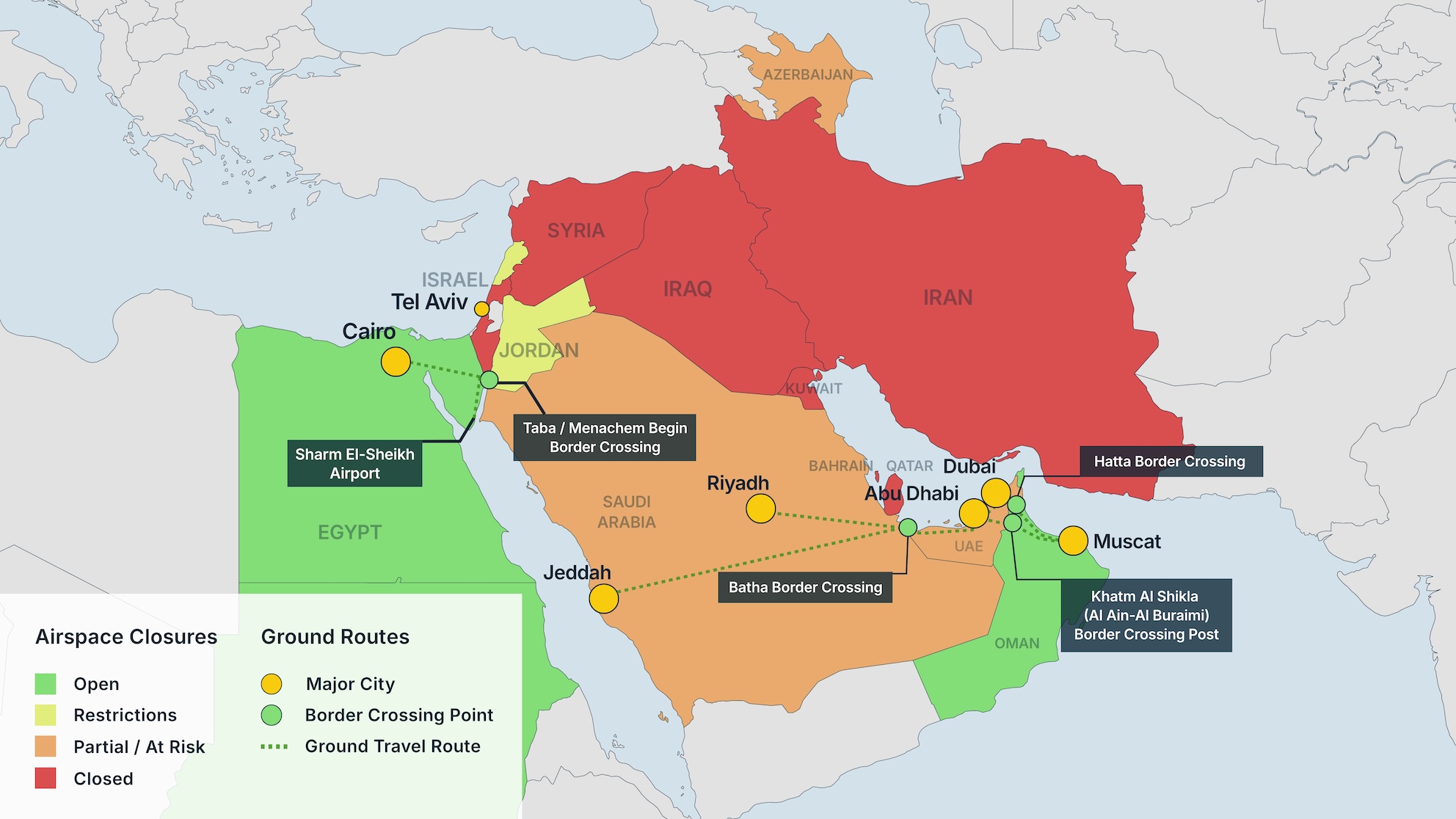
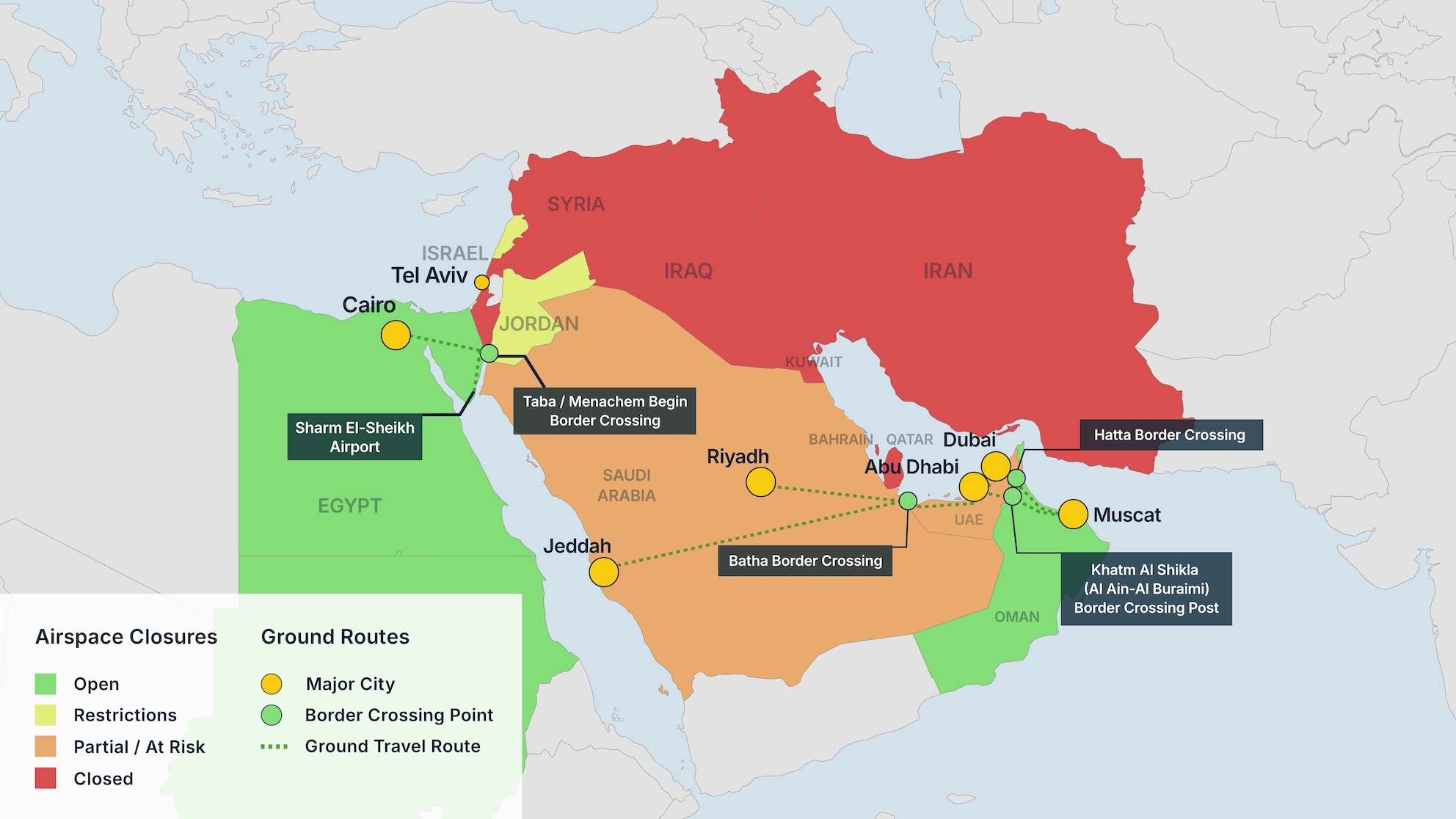
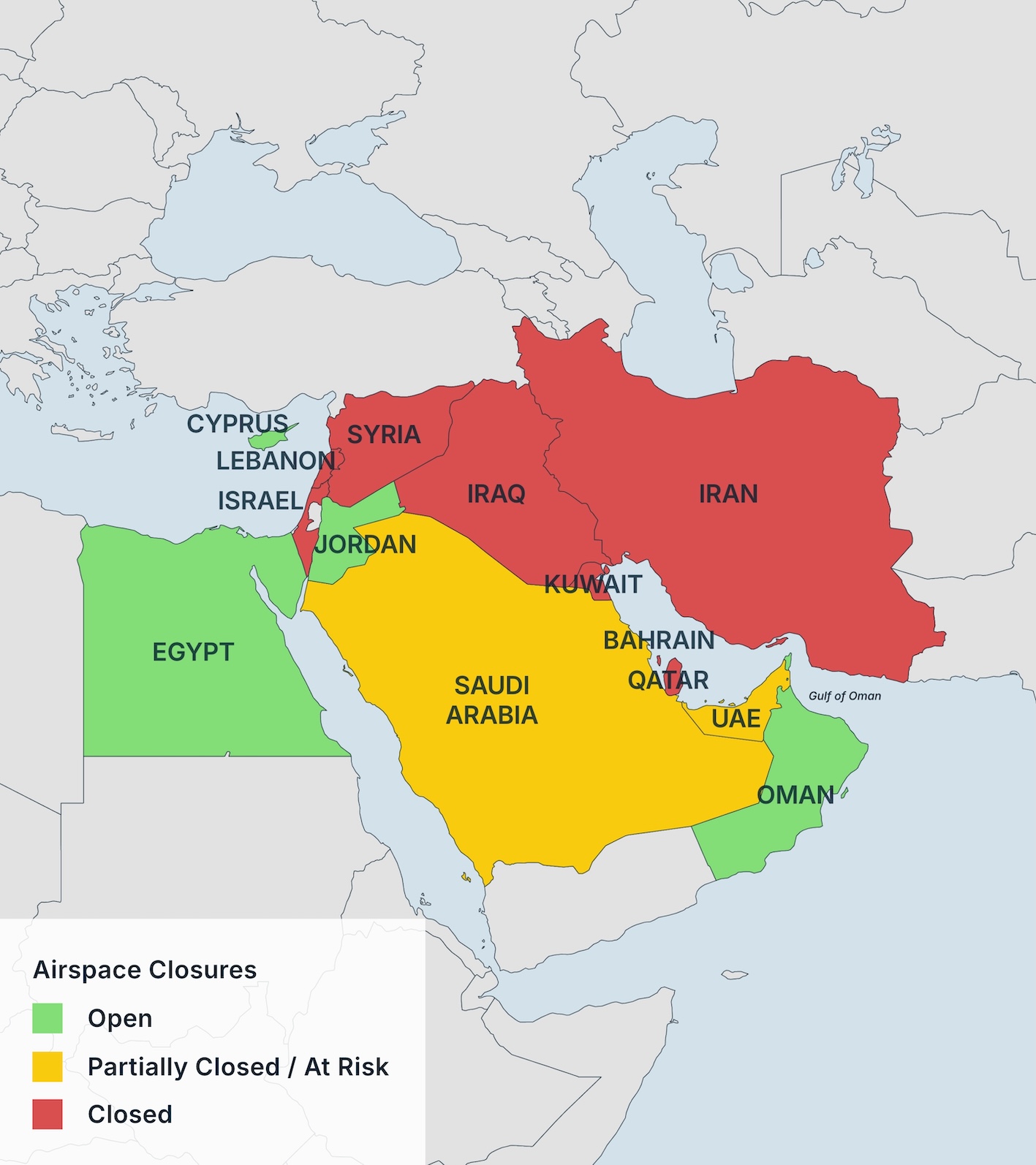
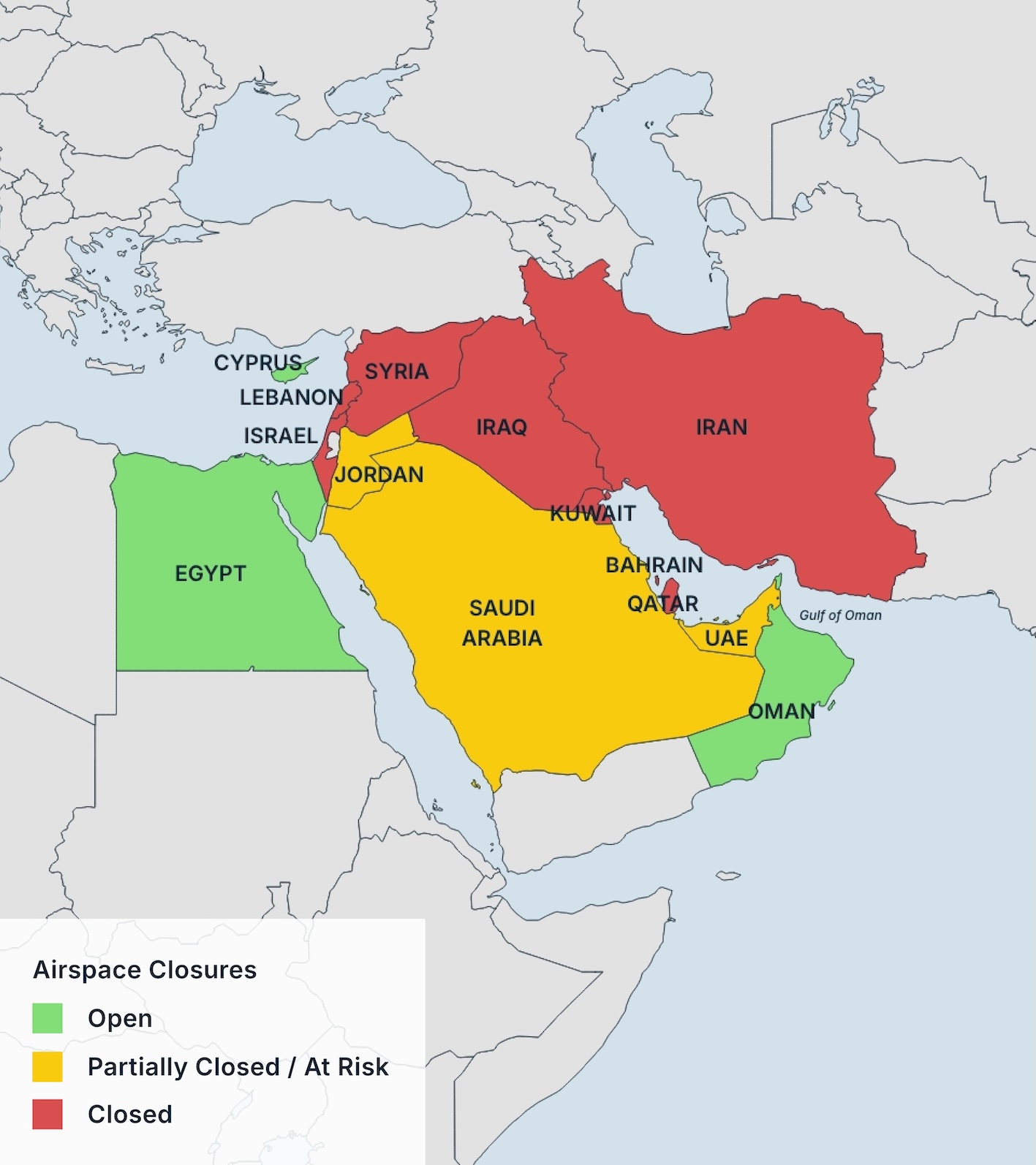
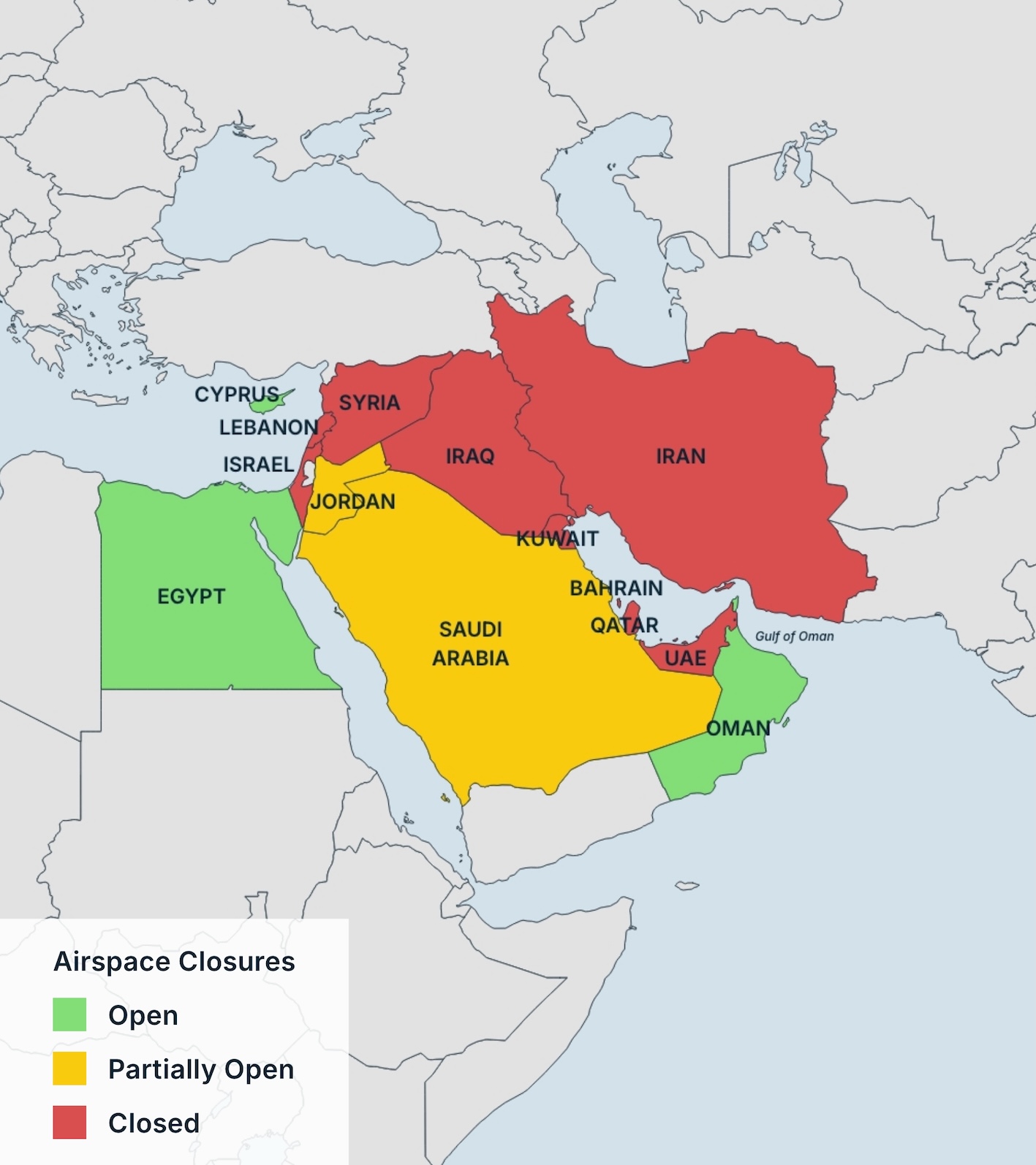
- As of 18 September, the airspaces of Jordan, Saudi Arabia, Kuwait, Bahrain, Qatar, the UAE, and Oman are open. However, Jazan, Abha, and Najran airports in southern Saudi Arabia have recently been regularly closed due to the Houthi threat.