INTELLIGENCE WINDOW: 23 Mar 2026 – 25 Mar 2026
Executive Summary
- Since 28 February, Iran has conducted missile and attack drone strikes against targets in Jordan, Saudi Arabia, Kuwait, Bahrain, Qatar, the UAE, and Oman in response to joint US and Israeli airstrikes inside Iran. The attacks have continued into 25 March.
- On 23 March, reports emerged that Saudi Arabia is strongly considering entering the war against Iran. With Iranian attacks against the Gulf States having been so significant, Saudi Arabia likely calculates that deterrence against Iran may need to be re-established with offensive operations. The entry of Saudi Arabia, in addition to potentially other Gulf States such as the UAE, Bahrain and Qatar, into the war against Iran, would highly likely result in an increased rate and scale of retaliation attacks being launched by Iran into these countries.
- A rare storm system has moved through the region this week, leading to heavy rainfall and thunderstorms in eastern Saudi Arabia, Kuwait, Bahrain, Qatar, the UAE, and Oman.
- On 24 March, Amazon Web Services (AWS) stated that it had been “disrupted” following attack drone activity in Bahrain, although it is unconfirmed whether Amazon’s Bahrain facility was directly hit by an attack drone or if the disruption was due to nearby strikes.
- On 25 March, QatarEnergy declared force majeure on its long-term liquefied natural gas (LNG) supply contracts with South Korea, Italy, Belgium, and China following damage to key production facilities caused by an Iranian ballistic missile strike overnight 18-19 March.
- Iran has continued strikes against civilian targets, economic assets and critical national infrastructure. Attacks have resulted in material damage at airports, ports, desalination plants, international hotels, government offices, oil and gas infrastructure, and locations hosting US military personnel.
- The scale of Iranian ballistic missile and attack drone strike packages launched at the Gulf states has decreased since 28 February. However, regular attack drone and lower volume ballistic missile attacks are likely to remain frequent in the short-to-medium term. Heavy air defence interceptor usage is likely reducing stockpiles in Kuwait, Bahrain, Qatar, and the UAE, potentially forcing air defences to prioritise targets and increasing the likelihood of successful penetrations.
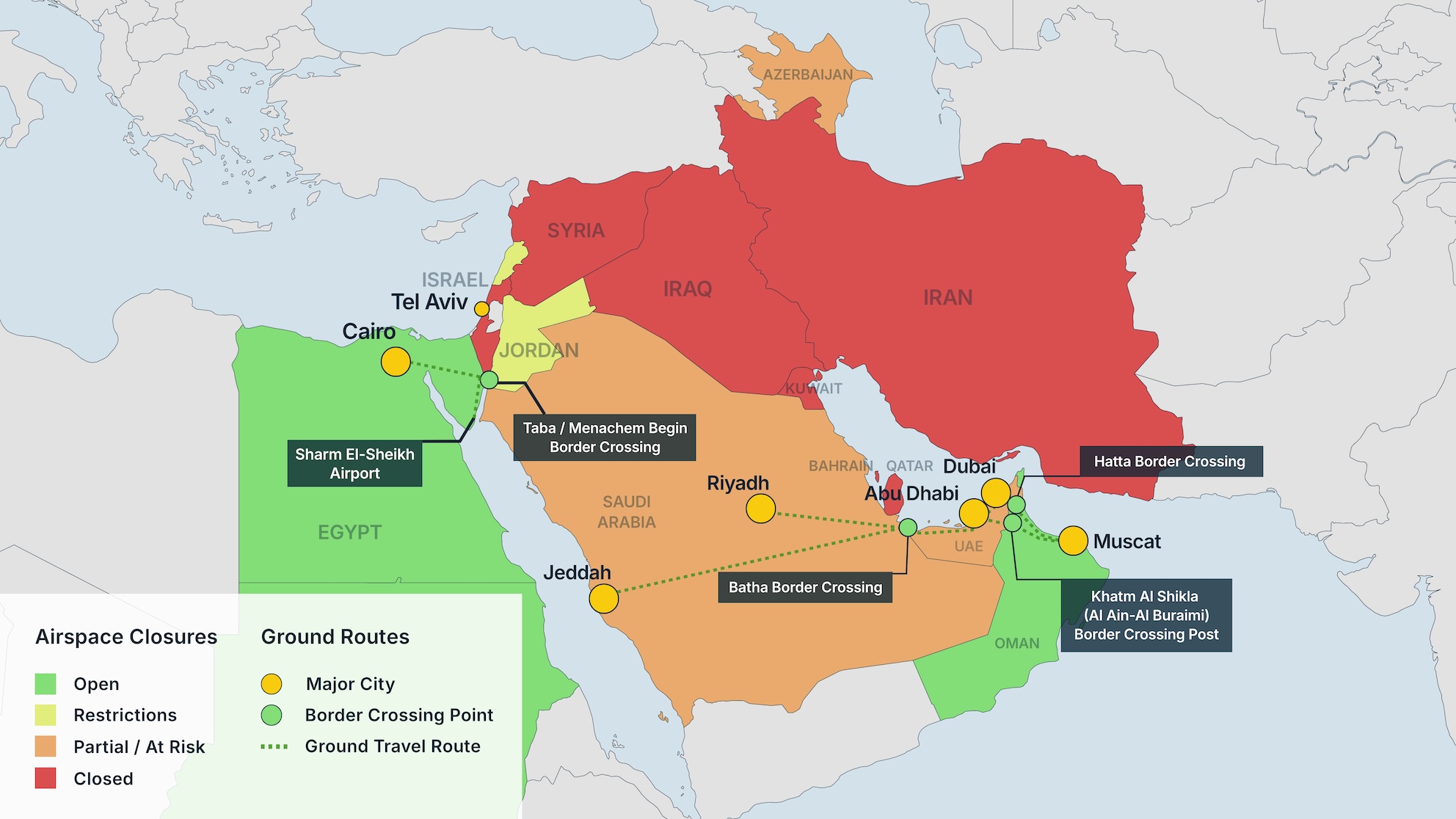
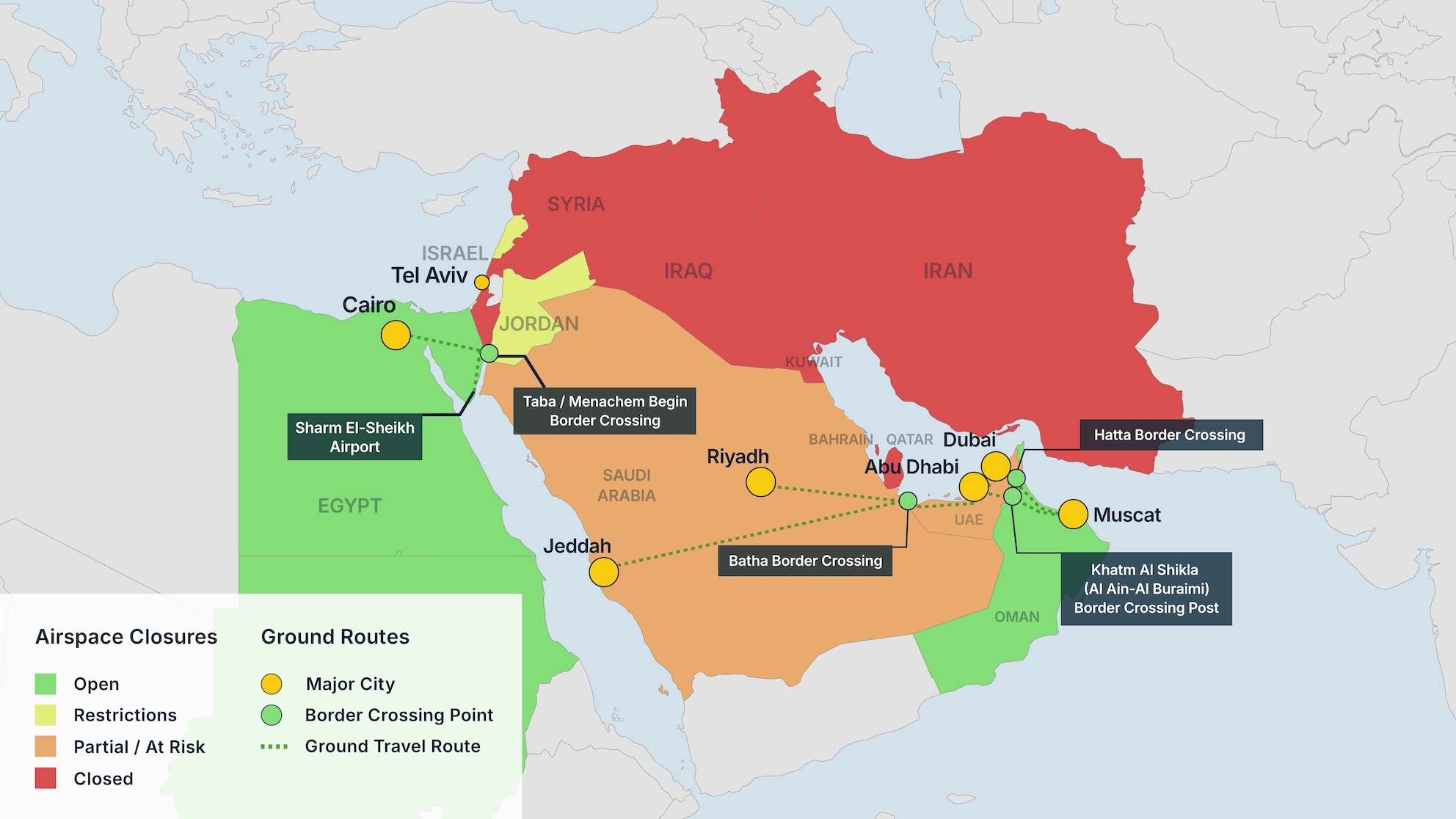
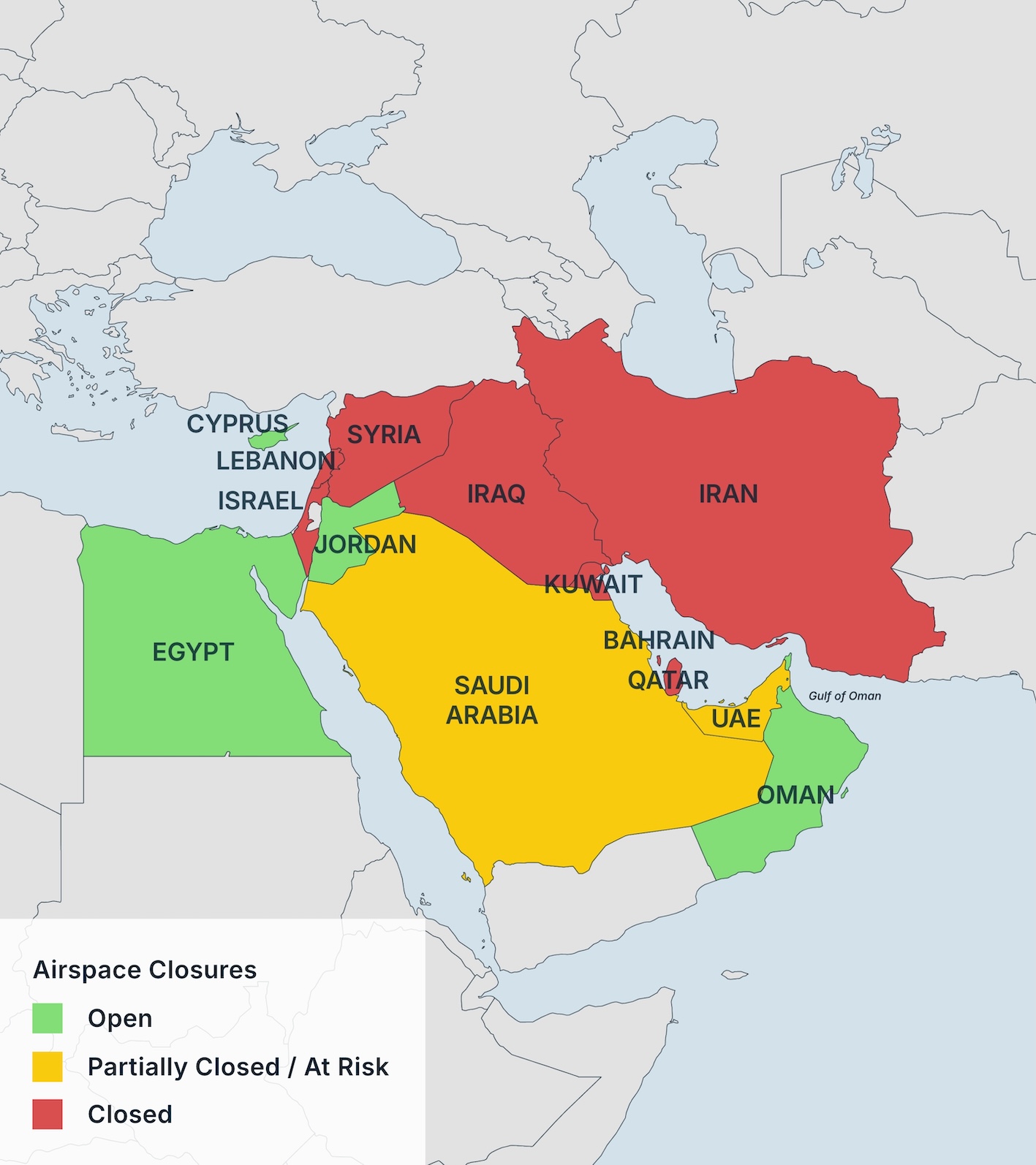
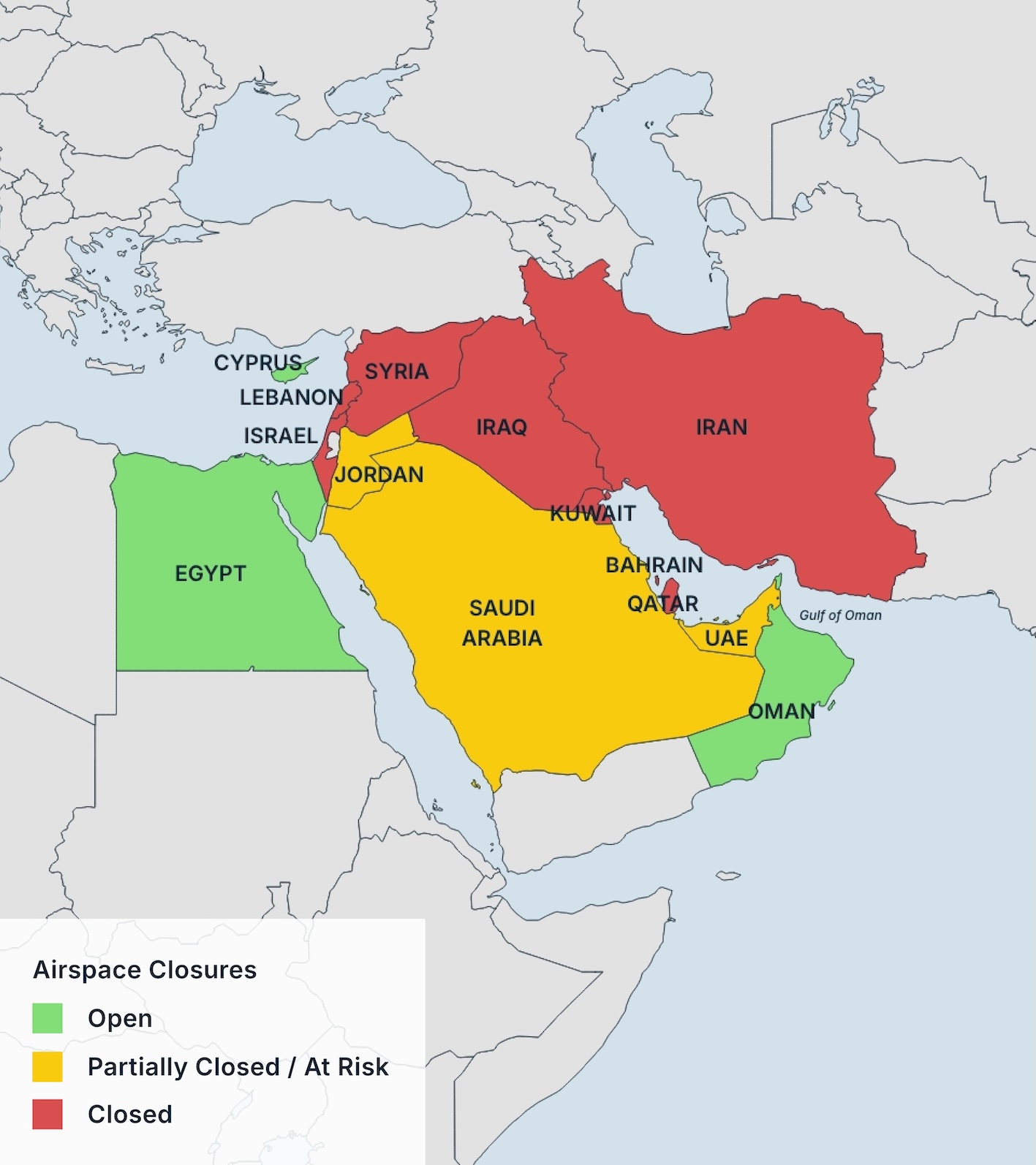
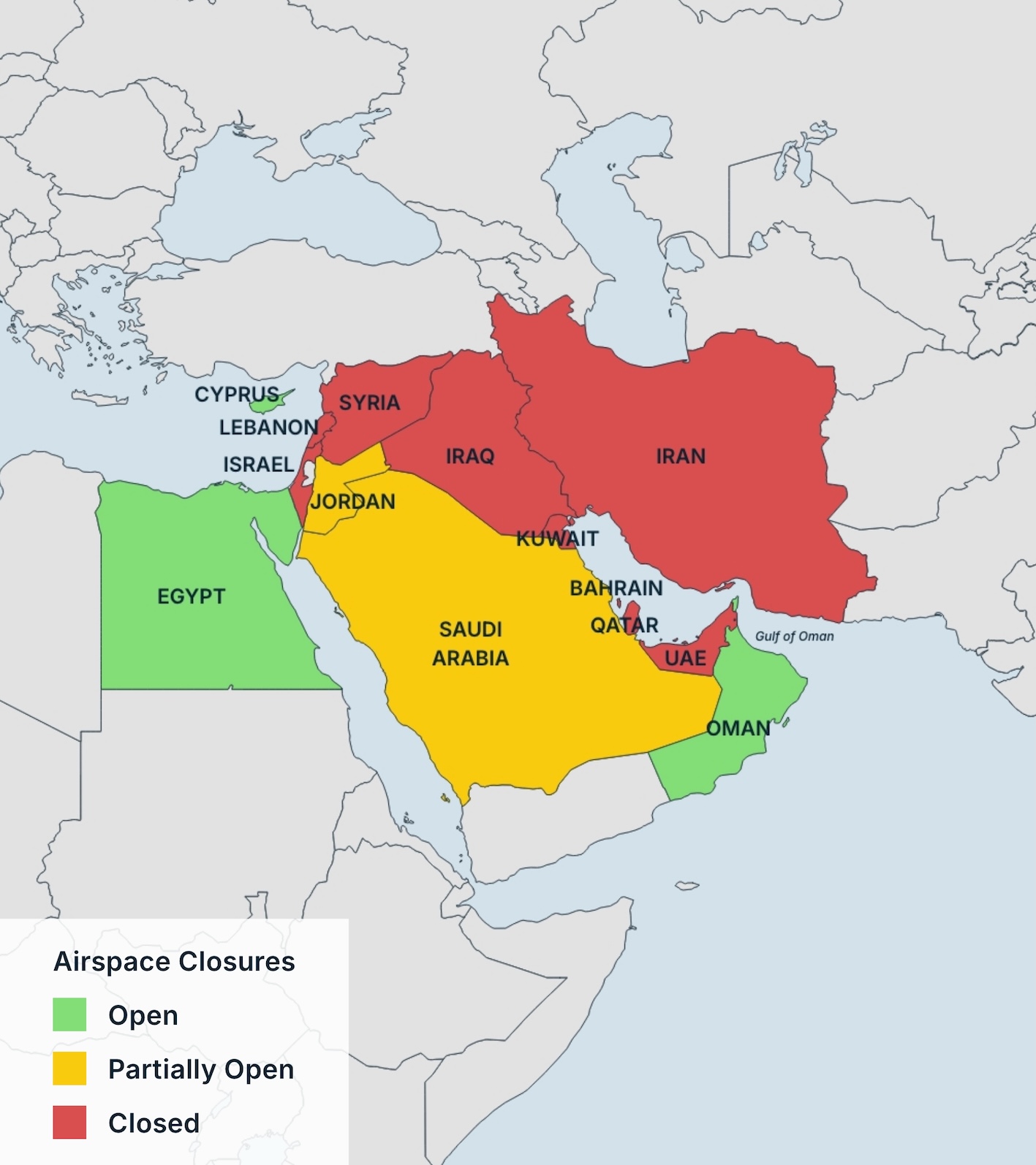
- As of 25 March, the airspace remains closed in Kuwait; Bahrain’s airspace is effectively closed with very limited exceptions; Qatar is allowing limited flights with prior permission; the UAE’s airspace has restricted access by way of Emergency Security Control of Air Traffic (ESCAT) zones; and Saudi Arabia, Oman and Jordan’s airspaces are open.