Election Guide
Evacuations from High-Risk Locations Call +44 (0)1202 308810 or Contact Us →
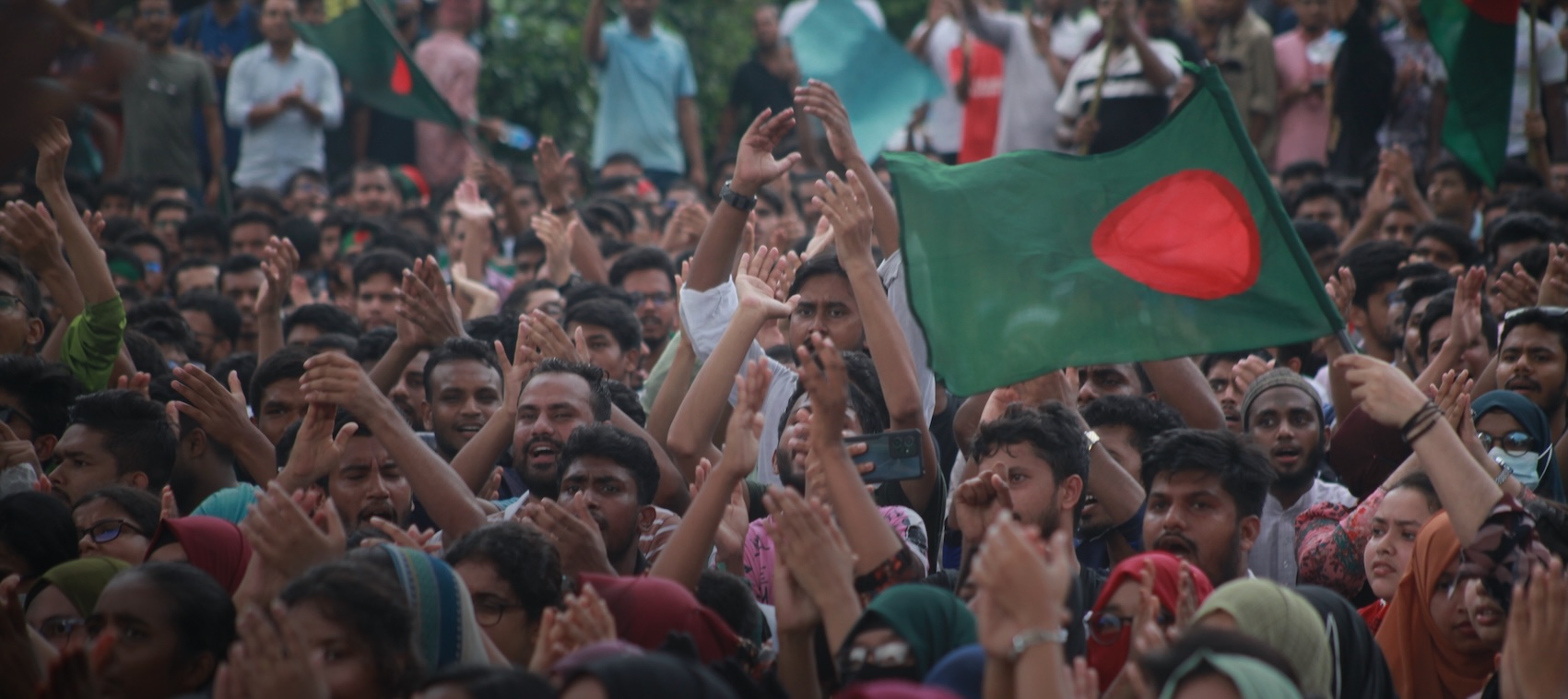
Bangladesh Holds First Elections Since 2024 Revolution
On 12 February, over 127 million Bangladeshi citizens will be eligible to cast their votes for the first time since the 2024 July Revolution, which toppled the 15-year government of Prime Minister Sheikh Hasina and her Awami League (AL) party. Voters will elect 300 members of the Jatiya Sangsad, the 350-member national parliament. The remaining 50 parliament seats are reserved for women and are assigned proportionally by the other MPs. Voters will also decide on the July Charter, a constitutional reform framework agreed upon by 30 parties following the uprising.
Dozens of parties have fielded more than 1,900 candidates to contest the 300 seats. However, the electoral campaign has evolved into a two-sided contest. On one side, the big-tent Bangladesh Nationalist Party (BNP) is leading the polls. Before the revolution, BNP was the main opposition party in Bangladesh. Since AL was banned in May 2025, BNP has managed to attract large swathes of supporters of the previous government.
Opposing it is a coalition, known as the “Like-minded 11 Parties” or “United Bangladesh”, founded in October 2025. The group is led by the other two major players in Bangladesh’s post-revolution political scene: the long-established Islamist party Jamaat-e-Islami (JI), which has emerged as a leading force on the right after years of marginalisation under Hasina, and the new, student-led National Citizen Party (NCP).
NCP, which was founded after the uprising, initially emerged as a reformist, progressive force. However, it has struggled to translate street support into electoral momentum. Its alliance with JI, which places it within a de facto right-wing Islamist coalition, has led to significant infighting, further weakening the party. In January 2026, 15 NCP party leaders resigned over the coalition deal.
The vote will take place amid high levels of mob violence and political clashes, often driven by the various parties’ youth wings. Hundreds of politically motivated assassinations or mob killings have occurred since the revolution, with political groups violently competing to “inherit” the spoils system that had previously been controlled by AL. Moreover, labour disputes, growing crime rates, socioeconomic grievances, a structural decline in the economically vital garment manufacturing sector, and an increase in sectarian violence in the restive Chittagong Hill Tracts region have all contributed to creating a highly unstable electoral campaign, and have resulted in major concerns over Bangladesh’s future political, economic and security trajectory.
Reflecting the high levels of insecurity, on 5 February the UK’s Foreign, Commonwealth, and Development Office (FCDO) updated its Bangladesh travel advisory to recommend “against all but essential travel” to the country.
ASSESSMENT
Disinformation and Close Results Likely to Drive Instability in Bangladesh
The two votes are likely to be very differently contested. The referendum will highly likely return a resounding victory for the “Yes” vote, as the July Charter remains backed by all the major parties as well as the incumbent interim government. However, the parliamentary vote will likely be deeply competitive.
The failure of the NCP to organise effectively and to build a significant base of support has made it likely that the elections will be a contest between the BNP and JI. This dynamic is likely to be conducive to growing ideological polarisation and street violence. Throughout January 2026, several episodes of violent clashes between BNP, JI, and other parties’ canvassers have occurred across the country, injuring dozens of people.
A key test for the stability of post-electoral Bangladesh will be whether there is a general acceptance of the outcome of the 12 February vote. Several factors are likely to hinder such a scenario. First, current polls indicate a close contest between BNP and JI. There is a realistic possibility that polls will return a close or uncertain result, which could prolong the vote-counting period and delay the release of final tallies.
Second, several leaders have publicly warned of “plots” to doctor the results. These statements could constitute attempts to lay the foundations for a rejection of the vote as invalid. Finally, local media have reported on a growing spread of online disinformation targeting the election, often leveraging Artificial Intelligence-generated content. The spread of fake or misleading stories online has become a key driver of mob violence in Bangladesh and is likely to intensify during and after the vote.
Deep political polarisation and the spread of online disinformation have a realistic possibility of inciting “vigilante” violence by political activists targeting poll workers or voters during and after voting procedures. In the days immediately following the vote, further cases of mob violence targeting officials, candidates, and elected representatives, as well as inter-party clashes, remain likely. Attacks on foreigners, minorities, or foreign-owned businesses are also possible, particularly if claims of “foreign involvement” in the election were to spread online. For example, previous cases of mob violence have targeted American-owned businesses or businesses perceived to be pro-American or pro-Israeli.
In the medium term, instability and violence are likely to remain pervasive. The likelihood of further insecurity will largely depend on the parties’ acceptance of the election outcome. In a scenario where this occurs, possibly via a commitment by the parties to respect the electoral results, Bangladesh could reach a level of greater political stability. Pre-election commitments, however, would need to be paired with assurances that the new opposition will not be marginalised from the policymaking process. These dynamics would need to involve at least the three major parties, but could be extended to other key political players. This, of course, would not eliminate other pre-existing issues, such as the economic and labour-related challenges faced by Bangladesh, but would likely reduce the short-term threat of political violence.
A more likely scenario involves the elections resulting in protracted political instability. In this scenario, competition for control of the patronage networks left behind by AL’s collapse prevents the parties from reaching a meaningful agreement. Even if the central leadership acquiesces to a deal, local and student chapters, who are more dependent on local patronage networks, are likely to continue violently competing. Smaller groups marginalised under Hasina are expected to exploit the opportunities created by the revolution, but are likely to react negatively to any indication that they will continue to be excluded from any form of political influence.
In any scenario involving long-term political instability, economic instability is likely to deteriorate. Foreign direct investment (FDI) would likely decrease, especially in key industrial sectors, as investors delay commitments or reallocate capital to more stable markets and political environments in the region, such as India, Indonesia, Vietnam or Cambodia. In the fiscal quarter following the July Revolution in 2024, FDI inflows to Bangladesh dropped by 71 per cent, as investors avoided the country due to deadly political unrest, labour agitation and high degrees of political and economic uncertainty.
Failure to achieve any meaningful form of political stability or cohesion in Bangladesh is likely to reinforce the country’s economic and security issues. In turn, prolonged instability is conducive to worsening recurrent cycles of economic disruption, labour unrest, political violence, deteriorating crime rates and sectarian tensions, many of which remain unresolved.

Request Journey Management Support