Election Guide
Evacuations from High-Risk Locations Call +44 (0)1202 308810 or Contact Us →
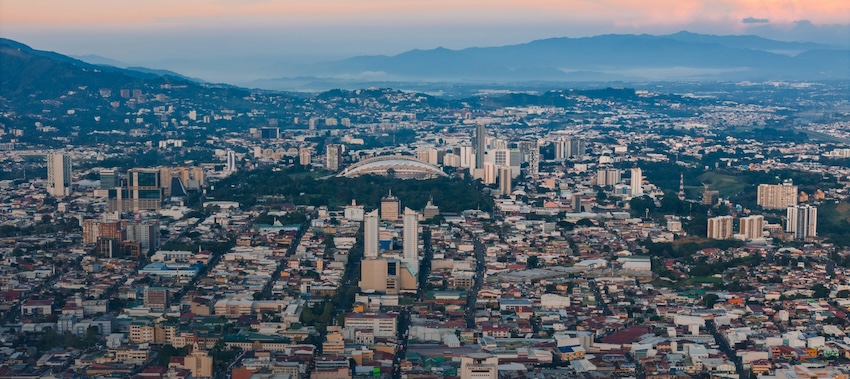
Costa Rica Holds General Elections on 1 February
Costa Rica will hold general elections on 1 February to elect the president, the two vice presidents, and the 57 members of the Legislative Assembly. To be elected president, a candidate must secure at least 40 per cent of the vote in the first round. If that does not occur, the two candidates who received the most votes will compete in a run-off election on 5 April. If multiple candidates cross the 40 per cent threshold, the one who receives the most votes is elected president in the first round. Legislative Assembly seats are assigned via proportional representation across the country’s seven electoral districts.
Current polls indicate that Minister of National Planning and Economic Policy Laura Fernández Delgado is a clear favourite to win the first round. Polling from 21 January suggests she is approaching the critical 40 per cent mark, providing her with a realistic possibility of securing an outright first-round victory if current support levels are maintained. Fernández is running for the right-wing populist Sovereign People’s Party (PPSO), which was only founded in 2022. She also has the backing of incumbent President Rodrigo Chaves, who is currently an independent and barred from running for re-election.
Several candidates are competing for a possible second spot in the runoff, although they are all polling below double digits. They include: Álvaro Ramos Chaves, of the centrist National Liberation Party (PLN), Fabricio Alvarado, an Evangelical singer who heads the conservative New Republic Party (PNR), Claudia Dobles Camargo, the former first lady of Costa Rica who is supported by the centre-left National Democratic Agenda (AND) coalition, and Ariel Robles Barrantes, of the democratic socialist Broad Front (FA).
ASSESSMENT
Crime Surge and Mano Dura Proposals Shape Voter Sentiment
The elections occur at a time of increasing political turmoil in Costa Rica. President Chaves is currently involved in a conflict with the Supreme Electoral Tribunal (TSE) and has survived two attempts to strip his electoral immunity over suspected electoral violations. This instability was highlighted on 19 January, when the head of Costa Rica’s intelligence agency reported that it had received information about a plot to assassinate Chaves ahead of the vote, although the activist who was accused has denied the allegations and suggested they were politically motivated.
Moreover, the crime rate has increased significantly, which has largely been attributed to the spread of transnational organised criminal groups since the late 2010s. In 2023, the murder rate reached 17.2 per 100,000, around 40 per cent higher than its previous peak in 2017. Increasing crime rates have resulted in growing public scepticism towards the political class. According to polls, large sections of the electorate have become disillusioned with the existing parties, with up to half of voters still undecided regarding their preferred candidate.
Law and order and the fight against corruption are highly likely to be the main issues during the electoral campaign, mirroring patterns observed in other Latin American states. In countries like Chile, Honduras, and Ecuador, leaders have increasingly responded to these concerns with promises to implement Mano Dura (“Iron Fist”) policies. Such policies have been characterised by mass detentions, increased police powers, and the curtailing of civil liberties. Mano Dura’s application by the government of El Salvador, which resulted in a sharp decrease in the violent crime rate, has become a model for other Latin American nations seeking to combat organised crime.
Fernández, expanding on Chaves’s positions, has pledged to implement Mano Dura in Costa Rica, vowing to build a “maxi-prison” like El Salvador’s CECOT facility, curtail civil rights in high-crime areas, and extradite Costa Ricans involved in organised crime to other countries, especially the US. These hardline stances, combined with Chaves’s enduring popularity (likely bolstered by the president’s clash with the legal “establishment”, have likely solidified Fernández’s primacy in the polls.
Still, Fernández’s victory, while highly likely due to the significant divisions within the opposition, is not certain. If the vote goes to a runoff, her competitor will almost certainly have an opportunity to unify at least part of this fragmented vote. However, the low levels of disillusionment within the electorate may make a significant swing in support between the two rounds unlikely.
Costa Rica has a long history of stable and peaceful political transitions. However, the country has had occasional waves of large-scale unrest, which have at times turned violent. The latest occurred in 2018, when labour unions staged a three-month strike over a proposed tax reform. The strike was marked by widespread and sometimes violent clashes between authorities and the protesters, as well as multiple incidents of vandalism.
It is unlikely that the upcoming vote itself will trigger large-scale violent unrest in Costa Rica. However, persistent political tensions, particularly the unresolved dispute between the executive and the TSE, could become catalysts for broader instability depending on the policies adopted by the incoming administration in its early months. The potential and controversial implementation of Mano Dura–style security measures is likely to result in significant division. While rising crime rates and the threats associated with transnational organised crime groups will almost certainly be leveraged to justify their implementation, for many, such draconian policies will likely be interpreted as a state overreach in a country that has traditionally championed democratic institutions and civil liberties, and which has historically been less affected by violent crime than many of its Central American neighbours.

Request Journey Management Support