Swipe Right – Swipe Wrong
Evacuations from High-Risk Locations Call +44 (0)1202 308810 or Contact Us →
Dating App Risks


How dating apps can create additional security risks during international travel
What This Report Covers
Dating apps can give malicious actors access to information about a traveller before they ever meet. Profiles, conversations, photographs, occupations, travel plans and linked social media can all help build a picture of an individual and their potential vulnerabilities.
Inside the report you’ll find:
Understand how risks can change between destinations and why behaviours that feel familiar at home may carry different implications abroad.
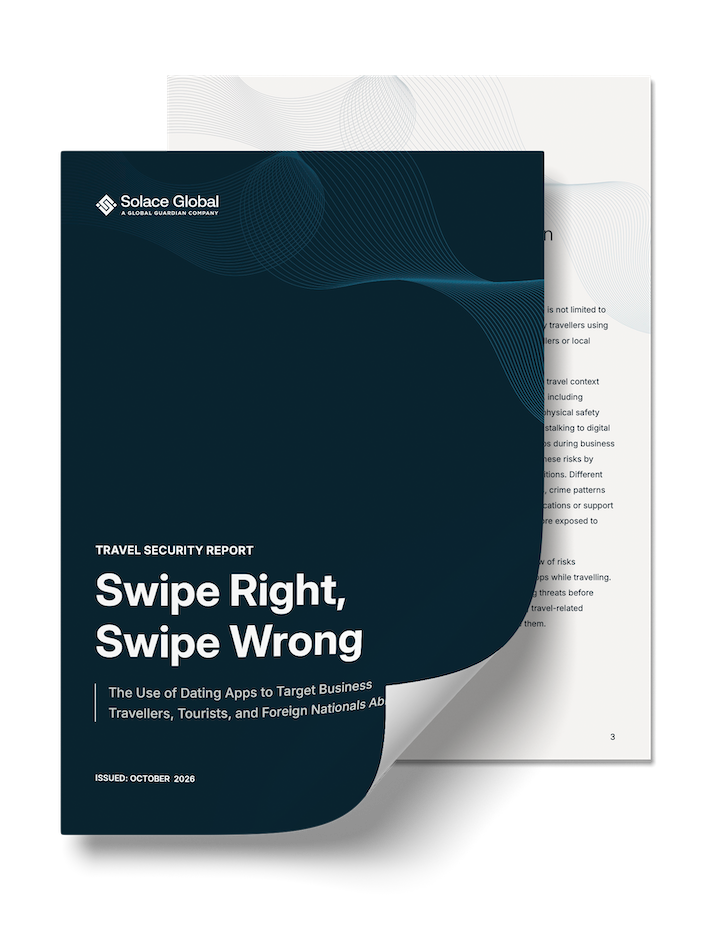
Why Dating Apps Can Present Greater Security Risks Abroad


How Travel Risk Management Supports Safer Business Travel
A comprehensive travel risk management programme considers more than the security risks associated with flights, accommodation and scheduled business activities. Employees may also encounter risks during personal activities outside working hours.
Organisations can support safer business travel by combining destination-specific intelligence, pre-travel preparation and access to security assistance.
Country Risk Assessments & Pre-Travel Advisories
Use Country Risk Assessments and Pre-Travel Advisories to provide relevant information on crime, local laws, identity-based risks and other destination-specific considerations before travel.
Ongoing Risk Intelligence
Use Risk Intelligence to maintain awareness of criminal tactics and security developments, including scams, kidnapping, organised crime and other forms of targeting highlighted in this guide.
24/7 Security Assistance
Provide travellers with direct access to a Global Security Operations Centre for 24/7 assistance if they experience a security incident or need support while abroad.
Together, these services help organisations consider the wider realities of business travel – giving employees relevant information before departure and access to support when circumstances do not follow the itinerary.
Building Greater Awareness Before Travel
Travellers do not stop making personal decisions when the working day ends, travel security guidance should therefore help employees understand risks beyond meetings, hotels and planned transport. The aim is not to police employees’ personal lives, but to provide information that helps them understand how the local environment can change the consequences of everyday decisions.
Before travel, organisations can:
- Provide current country and city risk intelligence
- Highlight relevant local laws and cultural considerations
- Explain common scams and criminal tactics
- Make travellers aware of higher-risk locations and behaviours
- Provide guidance relevant to individual traveller profiles
- Ensure employees know how to access assistance
- Keep emergency and security contact details easy to find
Frequently Asked Questions (FAQs)
What are the risks of using dating apps while travelling abroad?
Risks can include scams, theft, robbery, extortion, kidnapping and physical violence. In some destinations, travellers may also face identity-based targeting, state surveillance or legal consequences associated with sexual orientation, relationships or online communications.
Why can dating app use be riskier when travelling?
Travellers may have limited knowledge of safe locations, local crime patterns, laws and social attitudes. Criminals can exploit this unfamiliarity by directing someone towards a particular venue, private residence or isolated location.
Can dating apps be used to target business travellers?
Yes. Profiles and conversations can reveal information about a traveller’s occupation, accommodation, movements, perceived wealth and reason for visiting. Criminals may use this information to assess a potential target before arranging an in-person meeting.
Are high-net-worth travellers more exposed?
They can be. Dating profiles, linked social media and conversations can provide indicators of wealth or lifestyle. The guide examines cases in Colombia where criminal groups used dating apps to profile affluent travellers before drugging and robbing victims.
Can LGBTQ+ travellers face additional risks when using dating apps abroad?
Yes. Risks vary significantly by destination. Some of the risks LGBTQ+ travellers may face include identity-based violence, extortion, entrapment or legal consequences in countries where same-sex relationships are criminalised or subject to significant social stigma. An LGBTQ+ travel safety resource can provide useful information.
Can authorities use dating apps to target travellers?
In some countries, authorities have reportedly used fake profiles, seized accounts and information from dating apps to identify, monitor or entrap individuals. Foreign nationality does not necessarily protect travellers from questioning, detention or other action by local authorities.
How can organisations prepare employees for these risks?
Pre-travel intelligence and traveller education can provide information on local crime, laws, cultural considerations and security risks. Organisations should also ensure employees understand how to access assistance if they encounter a problem while travelling.
Should dating app risks be included in business travel risk assessments?
Business travel risk assessments should consider destination-specific threats that may affect employees during both professional and personal activities. Where relevant, this can include dating app scams, robbery, extortion, identity-based targeting and local laws. Providing tailored pre-travel guidance helps employees understand potential risks without unnecessarily restricting their personal activities, learn more about when tailored pre-travel advice is needed.

Download the Free Report
Download the full report to understand how dating apps are being used to target travellers abroad, how risk changes between destinations and the security considerations organisations and travellers should be aware of before departure.