Travel Risk Management Fundamentals
Evacuations from High-Risk Locations Call +44 (0)1202 308810 or Contact Us →

Help LGBTQ+ employees travel with greater confidence
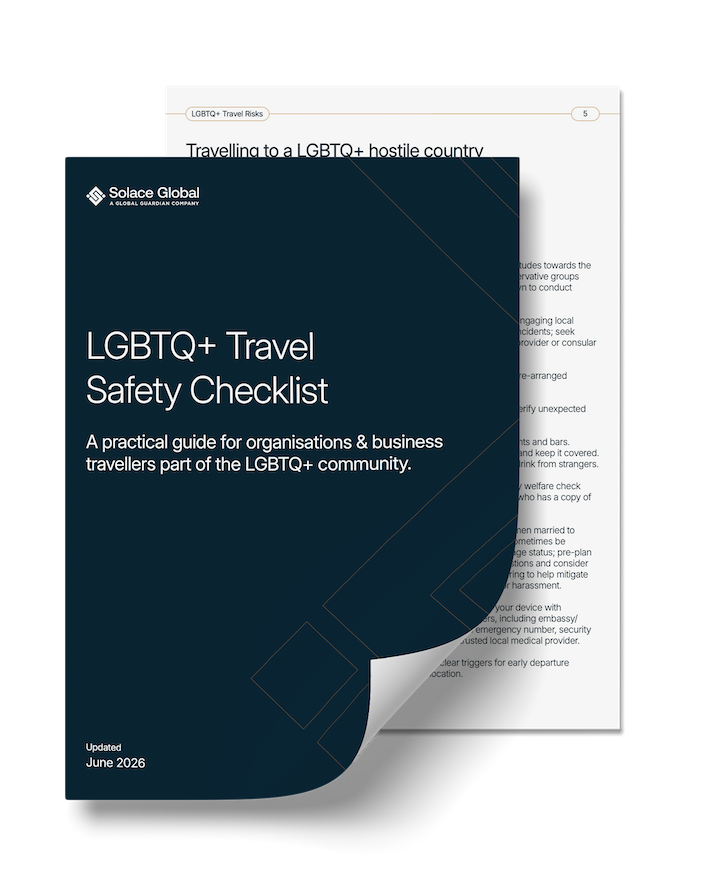
Solace Global’s LGBTQ+ Travel Safety Checklist is designed for HR directors, travel managers and risk teams managing corporate travel programmes. It covers destination risk assessment, traveller welfare monitoring and emergency response planning for LGBTQ+ employees travelling internationally.
International travel can present additional challenges for LGBTQ+ travellers. Legal restrictions, cultural attitudes, privacy concerns and security risks can vary significantly between destinations.
Our free LGBTQ+ Travel Safety Checklist provides practical guidance for organisations and employees to help improve travel planning, strengthen duty of care and reduce avoidable travel risks.
What This Checklist Covers
This practical checklist highlights some of the additional considerations organisations and LGBTQ+ employees may wish to take into account when planning international travel.
Topics include:
The checklist is designed to complement existing travel risk management and duty of care processes by providing practical guidance that organisations can share with employees travelling for work.
Why LGBTQ+ Travel Risk Requires Special Consideration
Business travel policies often focus on general health and security risks. However, LGBTQ+ employees can face additional challenges that may not be addressed through standard travel risk management programmes.
These can include:
- Criminalisation of same-sex relationships
- Restrictions on gender expression
- Hostile cultural attitudes
- Increased likelihood of harassment
- Privacy and data security concerns
- Difficulties accessing support services
A destination that appears relatively low risk for most travellers may present a different risk profile for LGBTQ+ individuals. Organisations should ensure destination assessments reflect these realities as part of their wider duty of care programme. The checklist highlights the importance of destination-specific assessments and tailored traveller support.


Supporting LGBTQ+ Employees Through Travel Risk Management
Effective travel risk management helps employees make informed decisions and ensures support is available when needed. The checklist outlines practical measures organisations can adopt, including:
Destination Risk Assessments
Evaluate legal, cultural and security risks affecting LGBTQ+ travellers before approving travel through destination-specific Country Risk Assessments.
Traveller Tracking & Welfare Monitoring
Maintain visibility of travelling employees and establish appropriate welfare check procedures using the Solace Secure platform for higher-risk destinations.
Secure Communications
Sensitive discussions should be handled discreetly and supported by clear Travel Risk Policies that help protect traveller privacy.
Emergency Response Planning
Ensure employees have access to 24/7 assistance and clear escalation procedures supported by a Global Security Operations Centre.
These measures support effective travel risk management and help organisations strengthen duty of care processes in line with ISO 31030 guidance.
Building an Inclusive Travel Risk Policy
Business travel policies often focus on general health and A travel risk policy should account for the varying experiences of employees travelling internationally. For LGBTQ+ travellers, destination-specific risks can differ significantly depending on local legislation, cultural attitudes and enforcement practices.
An effective policy should:
- Include destination risk assessments that consider LGBTQ+ travellers
- Provide access to support without requiring employees to disclose personal information
- Establish clear emergency escalation procedures
- Outline traveller welfare monitoring requirements for higher-risk destinations
- Ensure access to 24/7 assistance and crisis response support
- Define responsibilities across HR, travel management and security teams
Organisations reviewing their travel risk management programme may also wish to align their policies with ISO 31030 guidance for travel risk management.
Frequently Asked Questions (FAQs)
How can I protect LGBTQ+ travellers if I do not know their status?
Organisations should not rely on employees disclosing their sexual orientation or gender identity to access support. Instead, travel risk management programmes should be designed to be inclusive by default.
This means providing destination-specific travel advice, security guidance and support resources to all travellers. Inclusive travel policies help organisations meet duty of care obligations while ensuring employees can access assistance without sharing personal information.
Which countries pose the highest risk for LGBTQ+ business travellers?
Risk levels vary significantly between destinations and can change over time. In some countries, same-sex relationships remain criminalised, while others may have restrictive laws relating to gender identity, freedom of expression or public behaviour.
Organisations should assess legal, cultural and security risks before travel and provide destination-specific guidance for employees travelling to higher-risk locations. Up-to-date country risk assessments can help organisations make informed decisions and implement appropriate safeguards.
What should an LGBTQ+ inclusive travel policy include?
An inclusive travel policy should recognise that travel risks may affect employees differently depending on the destination and individual circumstances.
Key considerations include:
- Destination-specific risk assessments
- Access to support without mandatory disclosure
- Traveller welfare monitoring procedures
- Emergency escalation and crisis response plans
- Guidance on privacy and personal information
- Access to 24/7 assistance while travelling
A well-designed policy helps organisations strengthen duty of care and provide consistent support to all employees
What is an employer’s duty of care for LGBTQ+ employees travelling abroad?
Employers have a responsibility to take reasonable steps to protect employees travelling for work. This includes identifying potential travel risks, providing relevant information and ensuring appropriate support is available before, during and after travel.
For LGBTQ+ employees, duty of care may include assessing destination-specific risks, providing tailored guidance where appropriate and ensuring access to emergency assistance if circumstances change during travel.
How does ISO 31030 apply to LGBTQ+ travel risk?
ISO 31030 is an international standard that provides guidance on travel risk management. While it does not specifically focus on LGBTQ+ travellers, it encourages organisations to assess traveller-specific risks, provide appropriate support and implement proportionate risk mitigation measures.
For organisations with global travellers, LGBTQ+ considerations can form an important part of an ISO 31030-aligned travel risk management programme.
Where can LGBTQ+ travellers find additional travel safety information?
Travellers should review official government travel advice alongside employer guidance. Additional resources include organisations such as Stonewall, ILGA World, the International LGBTQ+ Travel Association (IGLTA), Human Dignity Trust and Rainbow Railroad.
These organisations provide information on legal considerations, traveller rights, destination guidance and support services for LGBTQ+ individuals travelling internationally.