Election Guide
Evacuations from High-Risk Locations Call +44 (0)1202 308810 or Contact Us →
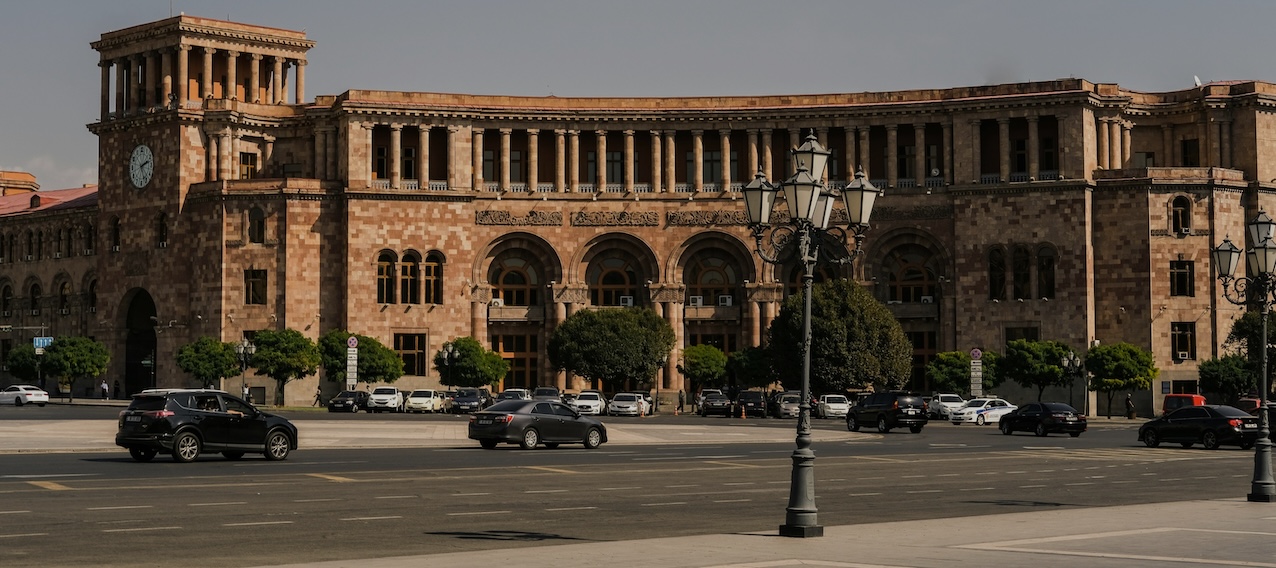
Armenia Heads to Polls Amid Competing Geopolitical Visions
On 7 June, nearly 2.5 million Armenians will vote to elect the 9th convocation of the National Assembly. The unicameral legislature has 101 members, elected for five-year terms across 13 electoral districts under a proportional representation system based on party lists. Seats are distributed proportionally among political forces that pass the electoral threshold: 4 per cent for parties, 8 per cent for alliances of up to three parties, and 10 per cent for alliances of more than three parties.
If a party wins the most votes but secures less than 54 per cent of seats, it receives additional seats to ensure a 54 per cent majority. Conversely, if a party wins more than two-thirds of seats, extra seats are allocated to opposition parties to limit the winning party’s share to a maximum of two-thirds. Four seats are reserved for representatives of national minorities. If no government is formed within six days of the publication of preliminary results, a second round must be held on the 28th day between the two parties that received the most votes.
This election will be the first regular national election since 2017 and follows two snap elections triggered by the constitutional crises in 2018 and 2021. It is also the first election after Azerbaijan’s military takeover of the disputed Nagorno-Karabakh in late 2023, after which the ethnic Armenian population fled to Armenia.
The incumbent prime minister, Nikol Pashinyan, is expected to lead the governing Civil Contract party into the election for his third consecutive term. Pashinyan rose to power following Armenia’s 2018 Velvet Revolution, when mass anti-corruption and anti-establishment protests forced the resignation of long-serving leader Serzh Sargsyan and brought Pashinyan to office on a reformist, democratic mandate. While Civil Contract’s failure to secure a majority in the March 2025 municipal elections in Gyumri raised fears over the party’s declining popularity, the party still dominates the polling, with the latest survey conducted by Breavis placing its support at 65 per cent. The opposition remains highly fragmented, with most parties polling between 2 and 12 per cent and largely comprising blocs seeking to revive ties with Russia.
Leading the opposition polling is Samvel Karapetyan of the Strong Armenia party on 12 per cent, a pro-Russian opposition bloc that emerged in late 2025. However, Karapetyan’s additional Russian and Cypriot citizenships mean that his legal eligibility to run in the election is disputed. The traditional opposition is led by former president Robert Kocharyan, who is associated with the Armenia Alliance, the main opposition bloc in parliament, and is polling at around 6 per cent. Kocharyan is broadly mistrusted by the public due to his association with the pre-Velvet Revolution political establishment. Polling between 2 and 4 per cent are Prosperous Armenia led by Gagik Tsarukyan, Mother Armenia led by Andranik Tevanyan, and the Democracy, Law, Discipline (DOK) Party led by Vardan Ghukasyan.
ASSESSMENT
Armenia’s Election Seen as Referendum on Azerbaijan Policy
The election is being framed as a referendum on relations with Azerbaijan and Russia. In August 2025, Pashinyan and Azerbaijani President Ilham Aliyev signed a joint declaration on the agreed text of a peace agreement, committing each side to progressing towards a formal signing and ratification. While the signing of the peace agreement depends on the adoption of a new constitution, which will require a referendum following the election, support for Pashinyan is largely centred around this issue. Pashinyan’s ousting would likely result in the end of the current peace deal with Azerbaijan.
The peace agreement would end a conflict that has been ongoing since 1988, when Armenian forces gained control of Nagorno-Karabakh during the collapse of the Soviet Union. In September 2023, Azerbaijan launched a rapid military operation in the territory, forcing the capitulation of Armenian forces and the fleeing of over 100,000 ethnic Armenians to Armenia. For this reason, the peace agreement is deeply divisive in Armenia, with public opinion split: 44 per cent in support and 41 per cent opposed. Supporters of the peace agreement argue that Armenia should stop tying its security to claims to Nagorno-Karabakh and open up economic opportunities with Azerbaijan and Turkey. Those who oppose perceive the government’s attempt to engage in a peace deal with Azerbaijan as legitimising Azerbaijan’s victory, which is largely considered a national humiliation for Armenians, and as an abandonment of Karabakh Armenians.
The Armenian Apostolic Church has engaged in heavy criticism of Pashinyan over his handling of Azerbaijan. Senior clergy and church-linked figures have been associated with anti-government protest activity, and in June 2025, Armenian authorities claimed they had foiled a coup plot involving Archbishop Bagrat Galstanyan. This has provided a rationale for a crackdown on the church, with authorities arresting several clerics in the lead-up to the election. Approximately 95 per cent of Armenia’s population identifies with the Armenian Apostolic Church, and the church’s influence will almost certainly shape how the public votes, particularly among conservative, nationalist, and rural constituencies.
Competing Visions for Armenia’s Foreign Policy
A Pashinyan re-election would likely move the formerly Moscow-aligned Armenia closer to the EU, which would pose a strategic threat to Russia’s influence in the South Caucasus. Armenia has historically been one of Russia’s key security and economic footholds in the region. However, Armenia suspended its participation in the Collective Security Treaty Organisation (CSTO), a Russian-led regional security bloc, in February 2024, following the Nagorno-Karabakh war, with Armenia accusing the CSTO of failing to defend its territorial integrity. In March 2025, Armenia’s parliament adopted a law to launch the process of joining the EU. A shift toward the EU would not only erode Russia’s direct influence in Armenia but would also establish a regional precedent that could be adopted by Georgia, which would significantly erode Russian influence in the Caucasus.
Russia has engaged in a disinformation campaign to attempt to sway the election in favour of a pro-Russian candidate. This campaign has attempted to appeal to Armenian nationalists opposed to the peace deal with Azerbaijan, engaging in a smear campaign to portray Pashinyan as an anti-Armenian Western puppet. Additional campaigns have accused Pashinyan and other officials of involvement in “child sex trafficking”. They have also alleged that Pashinyan owns a multi-million-euro property in France and real estate in the UAE, and that he has imported radioactive waste from France for burial in Armenia.
Further reports have claimed that plans are underway to transport tens of thousands of Russian-Armenians to influence the vote. Russian authorities have also imposed restrictions on Armenian imports, including vegetables and wine, exploiting Russia’s position as Armenia’s largest market for agricultural produce, while threatening to suspend their agreement on preferential supplies of gas and petroleum products. Part of Russia’s influence operations has been to portray the EU as interfering in the Armenian election, laying the groundwork for claims of election manipulation should Pashinyan win. While 71 per cent of participants in a 5-11 May 2026 International Republican Institute (IRI) survey believe the elections will be free and fair, this approach could almost certainly trigger protests from nationalist groups in the aftermath of the publication of the election results.
Polarisation Raises Risk of Post-Election Protests in Armenia
The 7 June election is broadly perceived as a contest over Armenia’s geopolitical orientation, making it a highly divisive vote. For many voters, the election amounts to a referendum on Pashinyan’s pro-Western agenda and pursuit of peace with Azerbaijan, versus more nationalist, Russia-aligned alternatives. This has almost certainly deepened political polarisation. Although recent polling broadly favours Pashinyan and indicates Civil Contract are highly likely to sweep the election, earlier surveys indicated a narrower gap between Civil Contract and pro-Russian opposition parties.
A narrow victory for Civil Contract would highly likely give opposition parties, church-linked critics, and nationalist actors greater scope to claim that the election had been distorted by external influence, media imbalance, vote buying, intimidation, or counting irregularities. Russian messaging portraying Pashinyan as a Western proxy would highly likely reinforce this narrative and provide the opposition with a unifying theme around which to mobilise. In this scenario, protests would likely occur in Yerevan, concentrating around the Central Electoral Commission, Republic Square, parliament, government buildings, and major road junctions. Heavy-handed policing, arrests of opposition figures, or forceful attempts to clear protest sites would almost certainly increase the risk of clashes.
If the latest polling is accurate and Civil Contract wins by a wide margin, protests would be far less likely to gain significant traction, with opposition parties and aligned groups likely to struggle to convince non-aligned voters that the result had been swung by external influence or manipulation. Pashinyan would likely present a decisive victory as a strong mandate for his peace agenda, including normalisation with Azerbaijan, deeper EU integration, and reduced dependence on Russia. A decisive Civil Contract victory would also strengthen Pashinyan’s political mandate to pursue constitutional reform, which he has framed as necessary to facilitate a full peace agreement with Azerbaijan.

Request Journey Management Support