Crisis Response
Evacuations from High-Risk Locations Call +44 (0)1202 308810 or Contact Us →

Turn geopolitical warning signs into pre-agreed action
Trigger Monitoring helps security and leadership teams reduce the time between recognising a deteriorating threat and taking action.
As part of emergency evacuation planning and crisis preparedness, it turns geopolitical warning signs into agreed thresholds, decision points and response measures. We work with your organisation to understand its people, operations, exposure and risk tolerance.
Together, we define the scenarios that matter, the indicators that could signal deterioration and decide in advance the actions your organisation intends to take at each stage.
The result is less ambiguity, reduced decision time and a clear route from intelligence to action.

What is trigger monitoring?
Trigger Monitoring, also known as an indicators and warnings framework, is a live intelligence planning service that monitors predefined signs associated with a deteriorating threat environment.
The aim is to identify when separate warning signs become a pattern, and define actions before conditions deteriorate.
These actions can be reviewed and approved by the board or relevant senior stakeholders in advance. If an agreed threshold is reached, security teams have an established authority and course of action rather than beginning the approval process while conditions are deteriorating.
How Trigger Monitoring Works in Emergency Evacuation Planning
Our intelligence team continuously monitor the relevant indicators, supported by our 24/7 Global Security Operations Centre, to assess how events are developing and advising on what should be considered next.

Indicators
We identify and monitor the political, military, diplomatic, and security developments most relevant to your people, locations and business activities.

Assessment
Our analysts assess developments collectively to identify converging warning signs and what they mean for your organisation.

Threshold
The assessment is measured against criteria agreed with your organisation, reflecting your exposure, risk tolerance and the point at which your security posture should change.

Pre-agreed Action
Each threshold is connected to actions that can be reviewed and approved in advance, from enhanced monitoring and travel restrictions to relocation or evacuation.

Response
When a threshold is approached or reached, our Intelligence, GSOC and Operations teams can advise on the next steps and support implementation where required.

Action
If operational action is required, Solace can support through to secure movement or evacuation worldwide.
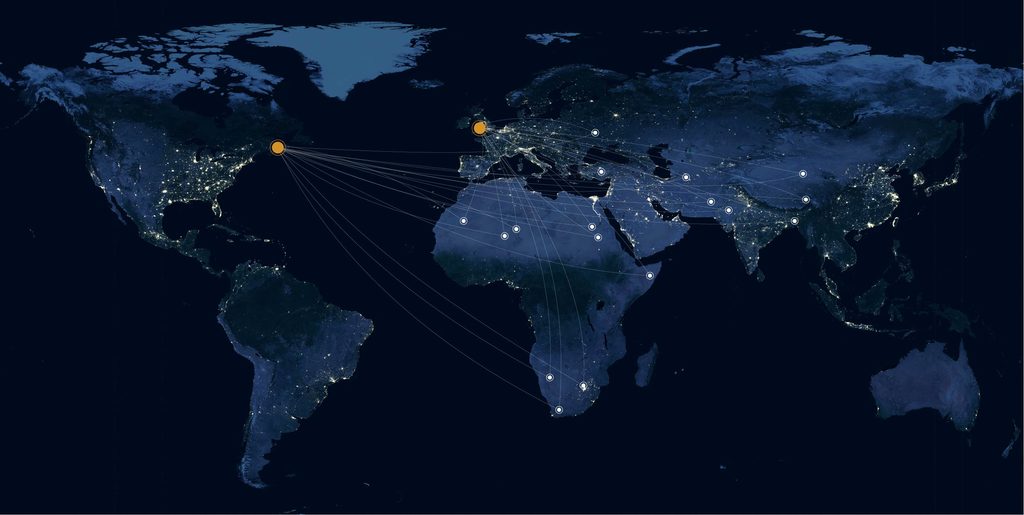
From intelligence to operational response
Trigger Monitoring is connected to Solace’s wider operational capability. As conditions change, the same coordinated team can help your organisation understand the threat, prepare its people and put practical response measures in place.
Intelligence
Continuous monitoring and analyst assessment help you understand how the threat is developing and what it could mean for your people and operations.
24/7 GSOC
Our Global Security Operations Centre provides continuous oversight, supporting escalation, communications and coordination against agreed protocols.
Journey Management
Where movement remains appropriate, our teams can plan and monitor journeys, adapting routes and security measures as conditions change.
Secure Movement
If greater support is required, we can coordinate secure transportation and in-country security resources appropriate to the operating environment.
Evacuation
Where relocation or evacuation becomes necessary, our Operations team can assess available routes and coordinate the movement of personnel to an appropriate destination.
From early warning through to operational response, intelligence remains connected to the teams responsible for delivery. This gives decision-makers access to current assessment while enabling practical preparations to begin as agreed thresholds approach.
What’s included in a trigger monitoring report
A Trigger Monitoring report, also known as an indicators and warnings matrix, is a live intelligence planning tool that monitors predefined political, military, diplomatic, economic, commercial, security and other indicators associated with a deteriorating threat environment.
Triggers might include increased military deployments that suggest shaping activity ahead of possible conflict, or the dispersal of aviation and naval assets as a military moves high-value equipment away from a potential strike area.
Many indicators can now be observed through open-source intelligence, including aircraft movements, maritime activity, official statements, diplomatic measures and reporting from specialist open-source communities. The value comes from assessing those developments together rather than in isolation.
When an evacuation threshold is reached
Reaching an agreed threshold does not automatically mean evacuation. It prompts the response your organisation has defined in advance, based on the intelligence, conditions at the time and your risk tolerance.
Where evacuation is required, Solace can support the practical response through our Operations team, 24/7 GSOC and global network of vetted security partners.
Trigger Monitoring helps establish when your organisation may need to act. Our emergency evacuation capability provides the operational support to help put that decision into practice.
Assess the situation
Before movement begins, our Intelligence and Operations teams assess the current security environment alongside the locations and circumstances of the people requiring support.
This helps establish the scale of the response and identify factors that could affect movement, including deteriorating security conditions, individual requirements and changes to transport or infrastructure.
Confirm viable evacuation routes
The most obvious departure route may not always be the most appropriate. Airports can close, flights may be reduced, roads can become inaccessible and border crossings may experience congestion or restrictions.
We assess available options against current intelligence, considering road conditions, airport operations, border access and onward travel requirements. Alternative routes can also be reviewed as conditions change.
Coordinate transport
The appropriate method of evacuation depends on the location, number of people involved and available transport infrastructure.
Solace can coordinate secure ground transportation, commercial aviation and cross-border movement, with other options considered where appropriate and operationally available. Arrangements are planned around the specific requirements of the movement rather than relying on a standard evacuation route.
Support secure movement
Once an appropriate route and transport option have been agreed, our Operations team can coordinate movement with vetted in-country security partners.
Security measures are proportionate to the operating environment and individual requirements. If conditions change during the journey, routes and arrangements can be reassessed using current intelligence.
Arrange onward travel
Reaching an airport, border crossing or safer location may only be one stage of an evacuation. Personnel may still require support reaching an appropriate onward destination.
Where required, Solace can help assess commercial flights, alternative airports and onward ground transportation, or support temporary relocation while further travel arrangements are established.
Maintain 24/7 operational oversight
Our 24/7 Global Security Operations Centre provides a central point of coordination throughout the evacuation, working alongside intelligence analysts, Operations teams and local security partners.
The GSOC monitors relevant developments, maintains communication and supports changes to movement plans where required, keeping operational activity connected with the latest intelligence throughout the response.
CASE STUDY
Intelligence in action during Middle East escalation in February 2026
Ahead of the 2026 US Iran War, Solace identified multiple indicators including the largest US regional military build-up since 2003, heavy airlift activity, combat aircraft and refuelling deployments, carrier movements, escalating rhetoric, diplomatic drawdowns and Iranian military exercises. None provided certainty on their own. Collectively, they indicated that the regional environment was highly vulnerable to rapid deterioration.
Trigger monitoring documents helped provide early warning indicators for our clients based in the region, enabling them to make preparations for their staff. This resulted in an efficient evacuation that avoided hours of delays at the border, and efficiency in costs – compared to surge pricing hours later.
First explosions identified in Tehran
06:24First alert posted in Solace Secure
06:27Clients notified directly
06:29Mainstream media begin reporting
06:50 to 07:15Posture guidance issued
07:00Alert+ issued by the intelligence team
08:48Evacuation planning guidance
issued for the wider region
09:00Evacuation options presented to clients
11:27FAQs
What is trigger monitoring?
Trigger Monitoring is a tailored intelligence and advisory service that monitors predefined indicators associated with an evolving threat. Analysts assess those developments collectively against thresholds agreed with your organisation, helping decision-makers understand when a change in response may need to be considered.
What types of indicators can be monitored?
Indicators depend on the scenario but may include political developments, military movements, diplomatic activity, government advice, civil unrest, commercial disruption, transport availability, airspace restrictions and other changes that could affect your people or operations.
How are trigger monitoring thresholds set?
Thresholds are developed around your organisation’s people, locations, operational requirements, existing plans and risk tolerance. Solace works with relevant stakeholders to identify the scenarios that matter and define the developments that would represent a meaningful change in risk.
Does reaching a threshold automatically trigger an evacuation?
No. Different thresholds can be connected to different response measures. These may include enhanced monitoring, employee communications, travel restrictions, sheltering in place, relocation or evacuation. The appropriate action depends on your agreed framework and the circumstances at the time.
How is Trigger Monitoring different from receiving intelligence alerts?
Alerts tell you that something has happened. Trigger Monitoring assesses developments against the scenarios and thresholds relevant to your organisation, looking at how individual indicators interact and what the emerging pattern could mean for your people and operations.
Can Trigger Monitoring support an existing evacuation plan?
Yes. Trigger Monitoring complements emergency evacuation planning by helping organisations establish when different elements of a plan should be considered or activated. It can also help identify changes in transport, routes or operational capacity that could affect available evacuation options.
What happens if an agreed threshold is reached?
Our intelligence and GSOC teams can provide guidance against the agreed framework and support escalation. If operational action is required, Solace can coordinate services including journey management, secure transportation and emergency evacuation.

Turn warning signs into a defined response
Know which developments matter to your organisation, understand when your risk environment is changing and establish what happens next before decisions become time-sensitive.
Solace Global Risk combines specialist intelligence, 24/7 monitoring and operational capability to support your organisation from early warning through to response.
Speak to our operations team about Trigger Monitoring.