Lessons in Crisis Preparedness
Evacuations from High-Risk Locations Call +44 (0)1202 308810 or Contact Us →
Emergency Evacuation

Emergency Evacuation Planning: How Organisations Can Prepare Before a Crisis
When security situations deteriorate, organisations rarely have the luxury of time. Whether responding to armed conflict, civil unrest, political instability or natural disasters, effective emergency evacuation planning depends on preparation long before an incident occurs.
This practical guide examines the lessons learned from the 2026 Iran conflict and explores how organisations can strengthen their evacuation planning, crisis response and travel risk management programmes before the next major disruption occurs.
What This Guide Covers
This practical guide explores the lessons organisations can apply from recent global crises to strengthen emergency evacuation planning, improve crisis preparedness and better protect their people during rapidly evolving security incidents.
Inside the guide you’ll find:
This guide translates real-world events into practical planning considerations that can be applied across a wide range of geopolitical, security and humanitarian crises. Whether your organisation manages routine international travel or operates in higher-risk environments, these lessons can help improve preparedness before the next emergency occurs.
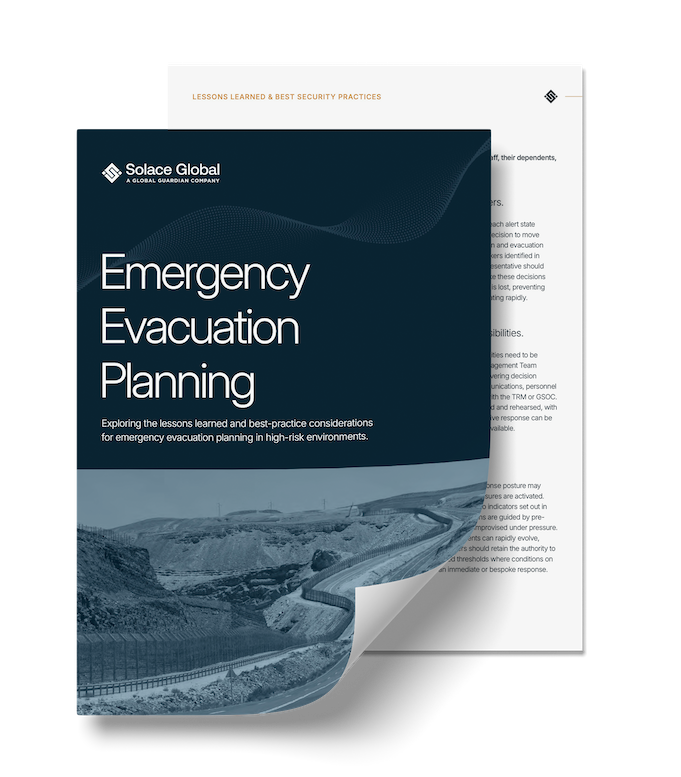
Why Emergency Evacuation Planning Matters
Many organisations have crisis management and business continuity plans in place. However, emergency evacuations present unique operational challenges that require dedicated planning, clear decision-making processes and access to timely intelligence.
Recent geopolitical events have shown how quickly security environments can change. Airspace closures, border restrictions, damaged infrastructure and rapidly evolving threats can disrupt travel with little warning, leaving organisations to make critical decisions under significant time pressure.
Challenges may include:
- Limited traveller visibility
- Airport and border closures
- Disrupted transport networks
- Communications failures
- Rapidly changing threats
- Coordinating multiple stakeholders
Organisations that prepare in advance are generally better positioned to respond with confidence. This guide explores practical lessons from recent international crises, helping strengthen emergency evacuation planning, travel risk management and duty of care before an incident occurs, rather than during it.


Supporting Emergency Evacuation Planning
Effective emergency evacuation planning combines intelligence, technology and operational expertise. Organisations can strengthen preparedness before an incident by adopting measures that support ISO 31030 travel risk management guidance, including:
Travel Risk Management
Develop a structured Travel Risk Management programme that supports duty of care through planning, risk assessments and coordinated response.
Global Intelligence
Use Risk Intelligence to monitor emerging threats, assess changing security conditions and support informed decision-making.
Emergency Evacuation
Prepare for unexpected crises with Emergency Evacuation services, providing intelligence-led planning and coordinated response.
24/7 GSOC Support
Maintain continuous oversight through a Global Security Operations Centre, providing monitoring, communications and incident coordination.
These measures support effective travel risk management and help organisations strengthen duty of care processes in line with ISO 31030 guidance.
Building an Effective Emergency Evacuation Plan
An emergency evacuation plan should be developed before a crisis occurs, not in response to one. Organisations with internationally travelling employees or operations in higher-risk environments should establish clear procedures, responsibilities and decision-making frameworks that enable a coordinated response when conditions deteriorate.
A robust evacuation plan should:
- Identify clear evacuation triggers and escalation procedures
- Define roles and decision-making responsibilities
- Maintain accurate traveller information and accountability
- Include contingency plans for transport disruptions
- Establish crisis communication protocols
- Provide access to 24/7 security and medical assistance
- Be reviewed and tested as part of wider business continuity planning
Organisations reviewing their emergency evacuation procedures should also consider aligning their travel risk management programme with the principles of ISO 31030, ensuring evacuation planning forms part of a broader duty of care framework.
Frequently Asked Questions (FAQs)
What is emergency evacuation planning?
Emergency evacuation planning is the process of preparing people, procedures and resources to safely relocate employees during security incidents, armed conflict, civil unrest, natural disasters or other disruptive events. Effective planning includes risk assessments, decision-making frameworks, communication plans, traveller tracking and access to security or medical assistance where required.
When should an organisation consider evacuating employees?
There is rarely a single trigger for an evacuation. Decisions are typically based on a combination of intelligence, changing security conditions, government advice, operational requirements and an organisation’s own risk tolerance. Planning these decision points in advance enables faster, more consistent responses during a crisis.
What should an emergency evacuation plan include?
A comprehensive emergency evacuation plan should include clear roles and responsibilities, escalation procedures, communication protocols, traveller accountability, evacuation routes, alternative transport options, security and medical support arrangements, and post-incident review processes. Plans should also be tested and reviewed regularly.
How does emergency evacuation planning support duty of care?
Organisations have a responsibility to take reasonable steps to protect employees travelling or working internationally. Emergency evacuation planning forms an important part of that responsibility by helping organisations prepare for incidents, coordinate responses and provide appropriate support when conditions deteriorate.
How does ISO 31030 relate to emergency evacuation planning?
ISO 31030 provides guidance on managing travel risks throughout the entire traveller journey. While it is not an evacuation standard, it recommends organisations establish appropriate risk assessment, incident response and crisis management processes – all of which contribute to effective emergency evacuation planning.
Why is intelligence important during an evacuation?
Situations can change rapidly during a crisis. Access to timely, verified intelligence helps organisations understand evolving risks, assess available transport options, identify safer routes and make informed decisions as conditions develop.
What are the biggest challenges during an emergency evacuation?
Common challenges include rapidly changing security conditions, transport disruptions, airport and border closures, communication failures, limited visibility of traveller locations and coordinating multiple stakeholders across different countries. Planning for these scenarios before an incident occurs can significantly improve response.
How often should emergency evacuation plans be reviewed?
Emergency evacuation plans should be reviewed at least annually, following major organisational changes, after significant geopolitical developments, and whenever lessons are identified from exercises or real-world incidents. Regular testing helps ensure plans remain practical and fit for purpose.
How can organisations improve emergency evacuation preparedness?
Organisations can strengthen preparedness by developing clear evacuation procedures, conducting destination risk assessments, monitoring emerging threats, maintaining accurate traveller information, testing crisis response plans and working with experienced travel risk management providers that combine intelligence, technology and operational support.

Download your free Emergency Evacuation Planning Guide
Download the Emergency Evacuation Planning guide to explore practical lessons from recent geopolitical events and learn how organisations can improve evacuation planning, traveller safety and crisis response before the next major disruption.